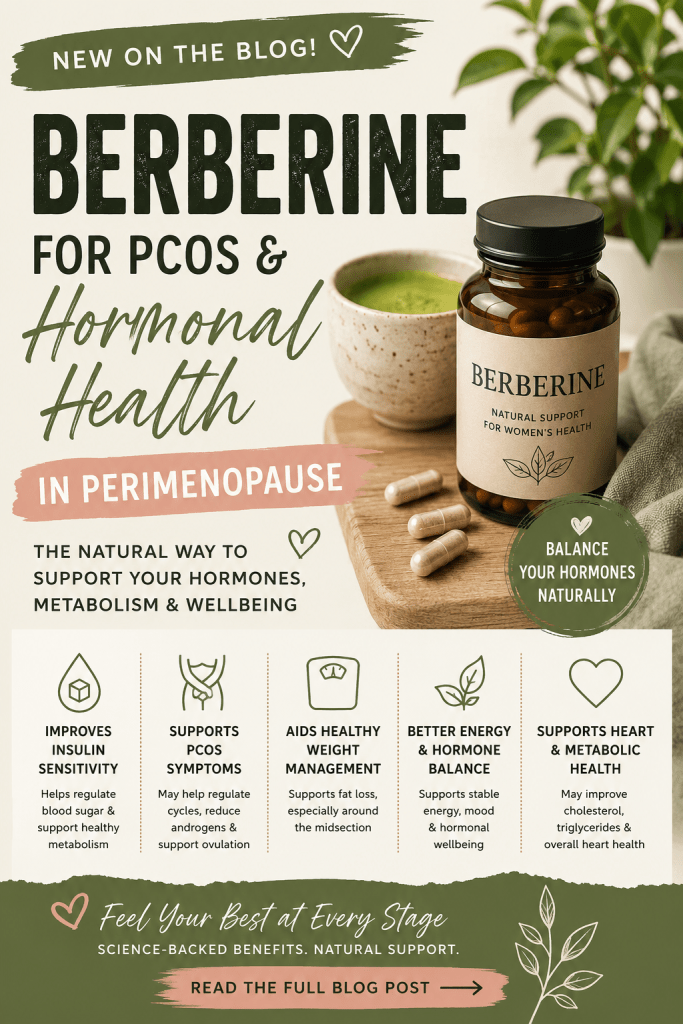
Berberine has become popular because it targets one of the underlying issues that many women with PCOS and some women in perimenopause experience: insulin resistance. While it’s not a replacement for medical treatment, research suggests it may be a useful supplement alongside healthy eating, exercise, and guidance from a healthcare professional.
🌿 Why Berberine Can Help Women with PCOS
One of the biggest drivers of PCOS is insulin resistance. When your body doesn’t respond well to insulin, it produces more of it. High insulin levels can stimulate the ovaries to produce more testosterone, which can contribute to:
- Irregular or absent periods
- Acne
- Excess facial or body hair
- Difficulty losing weight
- Fertility challenges
Berberine has been shown in studies to:
- Improve insulin sensitivity
- Help lower blood sugar levels
- Reduce insulin production
- Support more regular ovulation in some women
- Improve cholesterol and triglyceride levels
- Support modest weight loss when combined with lifestyle changes
Some research has even found berberine performs similarly to metformin for certain metabolic outcomes, although it isn’t appropriate for everyone and should not be considered a direct substitute without medical advice.
🌸 Berberine During Perimenopause
During perimenopause, estrogen and progesterone fluctuate, and many women notice:
- Weight gain around the abdomen
- Increased insulin resistance
- Fatigue
- Cravings
- Higher cholesterol
- Difficulty maintaining muscle
Berberine may help by:
- Supporting healthy blood sugar control
- Reducing blood sugar spikes after meals
- Helping the body use insulin more effectively
- Supporting healthy cholesterol levels
- Potentially making weight management easier when paired with a high-protein diet and resistance training
Because insulin resistance often worsens during perimenopause, improving insulin sensitivity may indirectly support hormonal balance and energy levels.
❤️ Additional Benefits
Research also suggests berberine may:
- Support heart health
- Help reduce inflammation
- Promote a healthier gut microbiome
- Support liver health, including fatty liver disease
- Reduce oxidative stress
⚠️ Things to Know Before Taking Berberine
Berberine isn’t suitable for everyone.
It should not be taken during pregnancy or breastfeeding. It can also interact with several medications, including:
- Diabetes medications (can increase the risk of low blood sugar)
- Blood pressure medications
- Blood thinners
- Some immune-suppressing medications
Common side effects include:
- Constipation
- Diarrhea
- Stomach cramps
- Nausea
Starting with a lower dose and taking it with meals may help reduce digestive side effects.
Is Berberine a “Natural Ozempic”?
You may have seen berberine called “Nature’s Ozempic” on social media. That’s an oversimplification. Berberine and medications like Ozempic work through different mechanisms. While berberine can improve insulin sensitivity and support blood sugar control, it has not been shown to produce the same degree of weight loss or blood sugar lowering seen with prescription GLP-1 medications. Calling it a “natural Ozempic” can be misleading.
The Bottom Line
For many women with PCOS, berberine may help improve insulin resistance, support more regular menstrual cycles, and improve metabolic health. For women in perimenopause, it may help support blood sugar control, reduce abdominal weight gain related to insulin resistance, and improve cholesterol and overall metabolic health.
The strongest results are typically seen when berberine is combined with:
- A whole-food, protein-rich diet
- Regular strength training
- Daily movement
- Quality sleep
- Stress management
If you’re considering berberine, it’s a good idea to discuss it with your healthcare provider, especially if you have diabetes or take prescription medications.
 Heartcore Wellness